
Adventure
Spiti Valley in Winter: The Complete Travel Guide
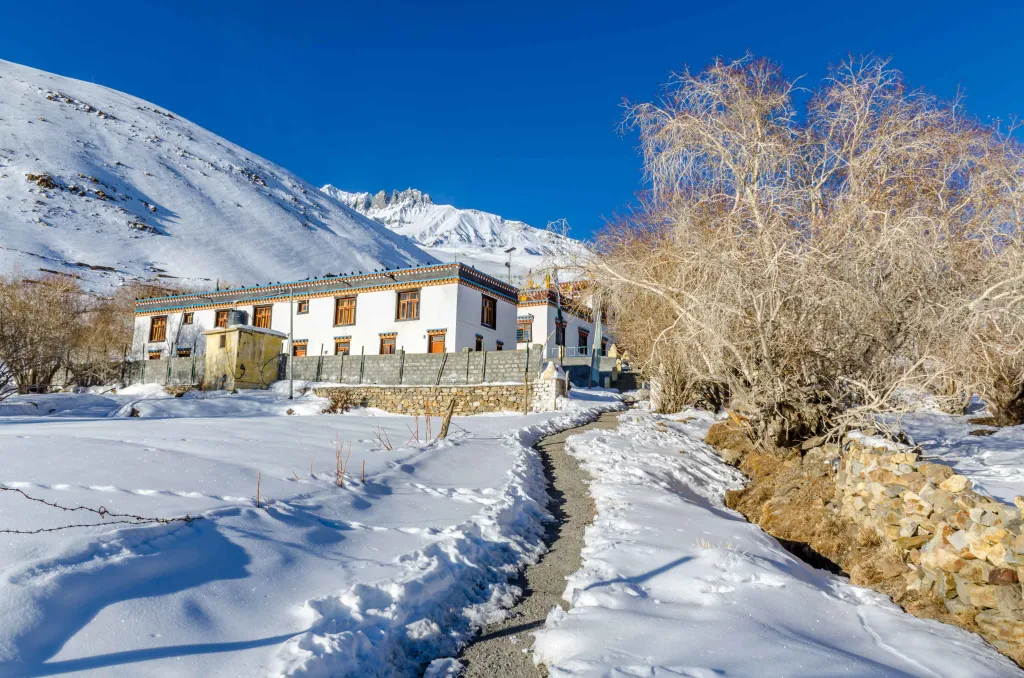
Winter transforms Spiti Valley into a snow-locked desert of frozen rivers and empty monasteries. Here’s how to plan a safe, unforgettable winter trip.
Most travelers see Spiti Valley in summer, when the high passes are open and the cold desert glows gold and brown against a bright sky. Far fewer see it in winter — when temperatures drop below -20°C, the Spiti River freezes solid, and the valley empties out almost entirely. For those who make the trip, winter Spiti is a different, starker kind of beautiful.
Why visit Spiti in winter
- The frozen river and waterfalls create surreal, almost lunar landscapes.
- Snow leopard sightings peak in winter, as the cats descend to lower altitudes in search of prey — this is the single biggest draw for winter travelers.
- Empty monasteries. Key, Dhankar, and Tabo monasteries, usually busy with summer tour groups, are near-silent in winter.
- A genuinely local experience. With almost no tourists, homestays in villages like Kibber and Komic offer an unfiltered look at how Spiti’s communities live through the cold months.
[Image: Snow leopard tracking expedition in snowy mountains — suggested search: “snow leopard Spiti winter tracking”]
How to get there in winter
The Kunzum and Rohtang passes close with the first heavy snowfall, cutting off the Manali route entirely from roughly November to May. The only way in during winter is via Shimla → Kinnaur → Spiti, a longer but consistently maintained route.
Expect the drive from Shimla to take 2-3 days with overnight stops, as roads are icy and daylight hours are short.
What to pack
- A -20°C rated sleeping bag, even if your homestay provides blankets.
- Thermal base layers, a down jacket, and a windproof outer shell.
- Insulated, waterproof snow boots — regular trekking shoes aren’t enough.
- Lip balm and heavy moisturizer; the cold, dry air cracks skin fast.
- Cash. ATMs are unreliable to nonexistent once you’re past Kaza.
Health and altitude
Most of Spiti sits above 3,000 m, and villages like Kibber and Komic are among the highest permanently inhabited settlements in the world. Combined with sub-zero cold, altitude sickness risk is real. Spend at least a day acclimatizing in Kaza before heading to higher villages, drink far more water than feels necessary, and travel with a guide who knows the winter routes.
[Image: Kaza town covered in snow with prayer flags — suggested search: “Kaza Spiti winter snow prayer flags”]
Where to stay
Homestays, not hotels, are the norm in winter Spiti — many hotels shut down entirely once the tourist season ends. Villages like Kibber, Langza, and Komic have basic but warm homestays, usually heated by a traditional bukhari (wood stove) in a shared family room.
Sample 6-day winter itinerary
- Shimla → Sarahan/Recong Peo — overnight stop in Kinnaur
- Recong Peo → Kaza — long drive day, acclimatize on arrival
- Kaza → Kibber → Key Monastery — day trip, snow leopard tracking begins
- Kibber → Komic → Langza — village stays, high-altitude villages
- Kaza → Dhankar → Tabo — monastery day, overnight in Tabo
- Tabo → Kinnaur → Shimla — return journey
Winter Spiti isn’t a comfortable trip, and it shouldn’t be attempted without proper cold-weather gear and local guidance. But for travelers who want to see the Himalayas at their rawest, few places compare.